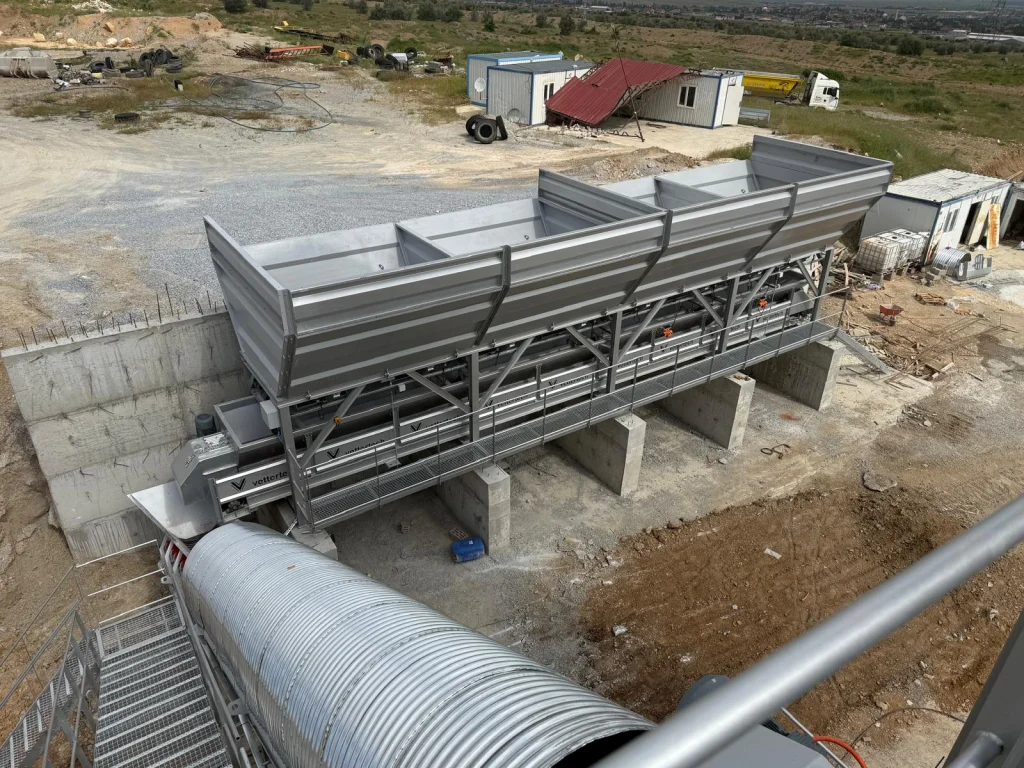
Aggregate makes up most of the weight of a cubic metre of concrete. So if the aggregate bin and conveyor system cannot keep up with the plant’s hourly capacity, production slows down no matter how fast the mixer is. In this article we explain the components of the aggregate feeding system and the criteria for choosing them.
What is an aggregate bin?
An aggregate bin is a steel hopper in which sand and crushed stone of different sizes are stored in separate compartments and batched into the weighing system through gates at the bottom. The number of compartments is usually chosen according to the number of aggregate fractions in your mix designs; bins with 3, 4 or more compartments are common. An extra compartment gives you the flexibility to use a new aggregate fraction in the future.
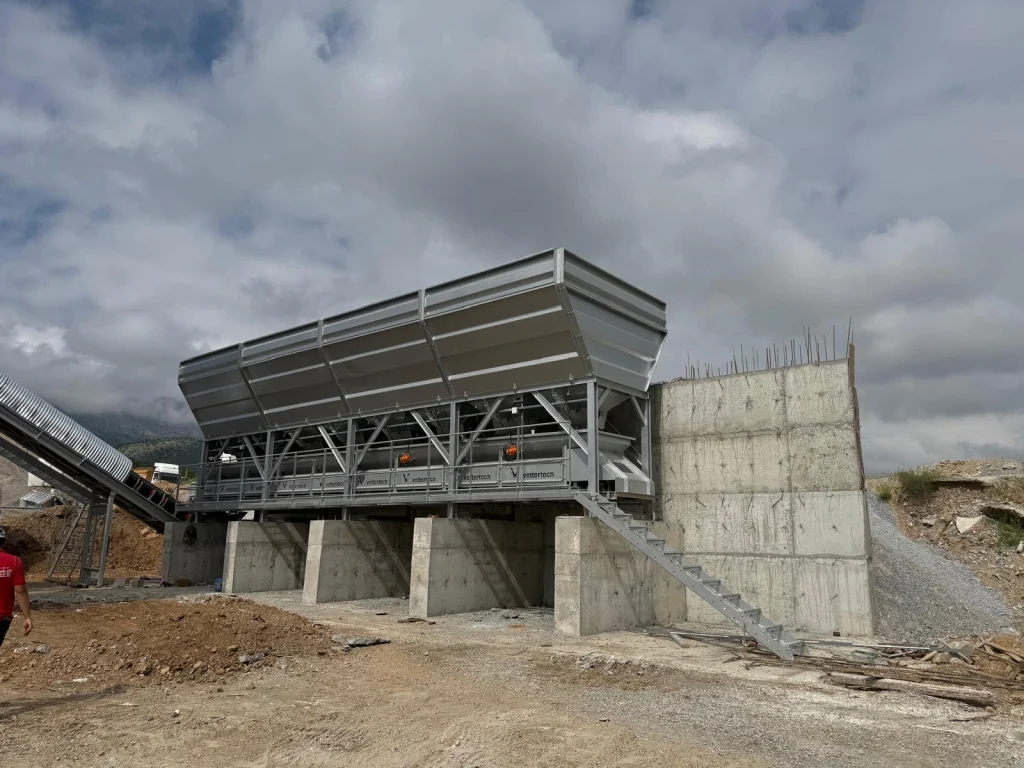
Volume and loading
- Bin volume is chosen according to how often the wheel loader can refill the compartments. If the volume is too small, the loader has to work at the bin non-stop.
- A loading ramp or retaining wall lets the loader reach the top of the bin easily.
- Divider plates between the compartments prevent different aggregates from mixing.
- A vibrator on the sand compartment helps damp sand flow.
Batching gates
The gates under the compartments are usually pneumatically operated. Opening the gate partially or feeding in pulses as the target weight approaches reduces overshoot in weighing. Because the moisture in the aggregate affects the amount of water, a moisture probe can also be fitted to the sand compartment; its readings are used to correct the water and aggregate values automatically. You can find the calculation side of this in our moisture correction guide.
Inclined belt conveyor or skip hoist?
| Feature | Inclined belt conveyor | Skip (bucket) system |
|---|---|---|
| Conveying method | Continuous flow | Batch by batch, bucket on rails |
| Capacity | Suitable for high capacities | Small and medium capacities |
| Space required | Long; distance is needed because the incline is limited | Short; suits tight sites |
| Typical use | Stationary and large mobile plants | Compact plants |
Covering the belt conveyors protects the aggregate from rain and wind, reduces dust and delays the belt freezing in winter. A service walkway and handrails along the belt make maintenance and cleaning safe.
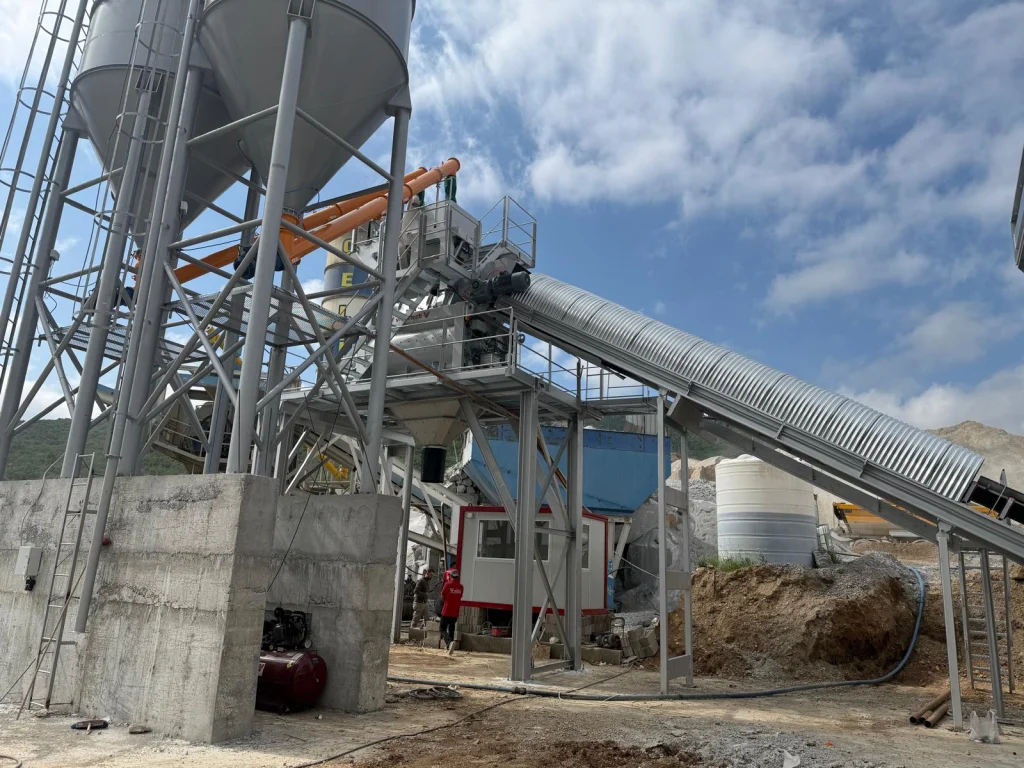
Winter conditions
In cold climates, frozen aggregate affects both material flow and concrete temperature. Heating in the bin compartments, covered belts and the use of hot water should be planned for winter production.
The aggregate feeding system should be designed together with the rest of the plant. For choosing bins and belts to match your capacity, see our capacity calculation guide; for completed examples, visit our stationary concrete batching plants page, or get in touch with us.
Let's choose the right plant for your project
Get a free quote for a concrete batching or crushing plant that fits your capacity, site and budget.