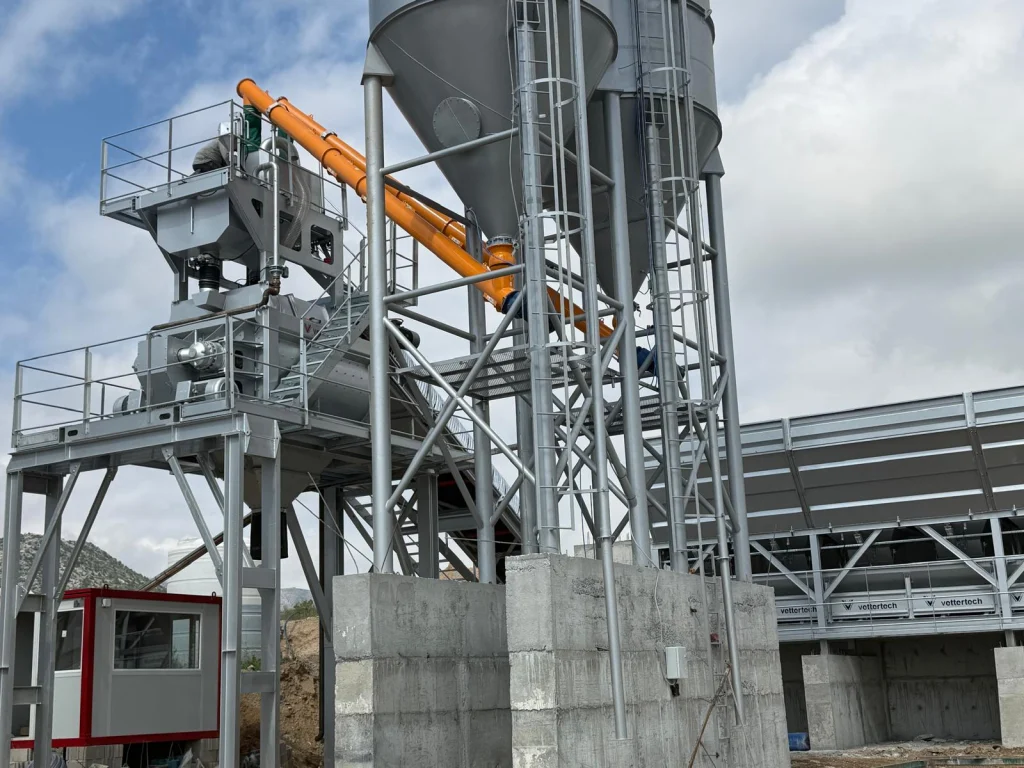
Capacity is the first decision when buying a concrete batching plant: how many cubic metres per hour should it produce? A plant that is too small cannot keep up on busy days, and one that is too large wastes investment and operating cost. This guide shows how to work it out step by step.
Theoretical capacity: batch volume × batches per hour
The theoretical capacity is: Capacity (m³/h) = Batch volume (m³) × 3600 ÷ Cycle time (seconds). The cycle time is the total time of one batch, including discharging materials into the mixer, mixing, discharging the concrete and closing the gate.
| Batch volume | Cycle time | Batches per hour | Theoretical capacity |
|---|---|---|---|
| 1 m³ | 60 s | 60 | 60 m³/h |
| 2 m³ | 60 s | 60 | 120 m³/h |
| 2 m³ | 75 s | 48 | 96 m³/h |
| 3 m³ | 65 s | ≈55 | ≈165 m³/h |
With the same mixer, capacity drops quickly as the cycle gets longer. The way to keep the cycle short is to weigh the next batch while the mixer is still mixing. For example, the DKT CPlants automation software used in Vettertech plants runs the weighing and mixing lines independently in this way. For mixer types, see our twin-shaft mixer guide.
Why is real output lower?
The catalogue figure assumes uninterrupted operation. On site, truck changes, mix-design changes, delays in aggregate feeding and quality-control breaks reduce output. In practice, average production at many plants stays clearly below the theoretical capacity, so size the plant for your peak hour and leave a margin.
How to work out your requirement
- Daily demand: for example 600 m³ per day.
- Working hours: over 10 hours, that is an average of 60 m³/h.
- Peak hour: on large pour days demand rises above the average, for example to 90 m³/h.
- Margin: since real output is lower than theoretical, a plant with 120 m³/h theoretical capacity is a sensible choice in this example.
Number of truck mixers
Plant capacity is useless if the concrete cannot reach the site. Approximate truck count = (hourly output ÷ truck volume) × round-trip time (hours). A plant producing 60 m³/h with 10 m³ trucks and a 1.5-hour round trip (loading, travel, pouring, return) needs (60 ÷ 10) × 1.5 = 9 truck mixers.
Cement and aggregate demand
Depending on the mix design, one cubic metre of concrete uses roughly 1.8–1.9 t of aggregate and 300–400 kg of cement. A plant producing 100 m³/h therefore consumes about 180–190 t of aggregate and 30–40 t of cement per hour. Size the aggregate bins, the loader and the cement silos accordingly.
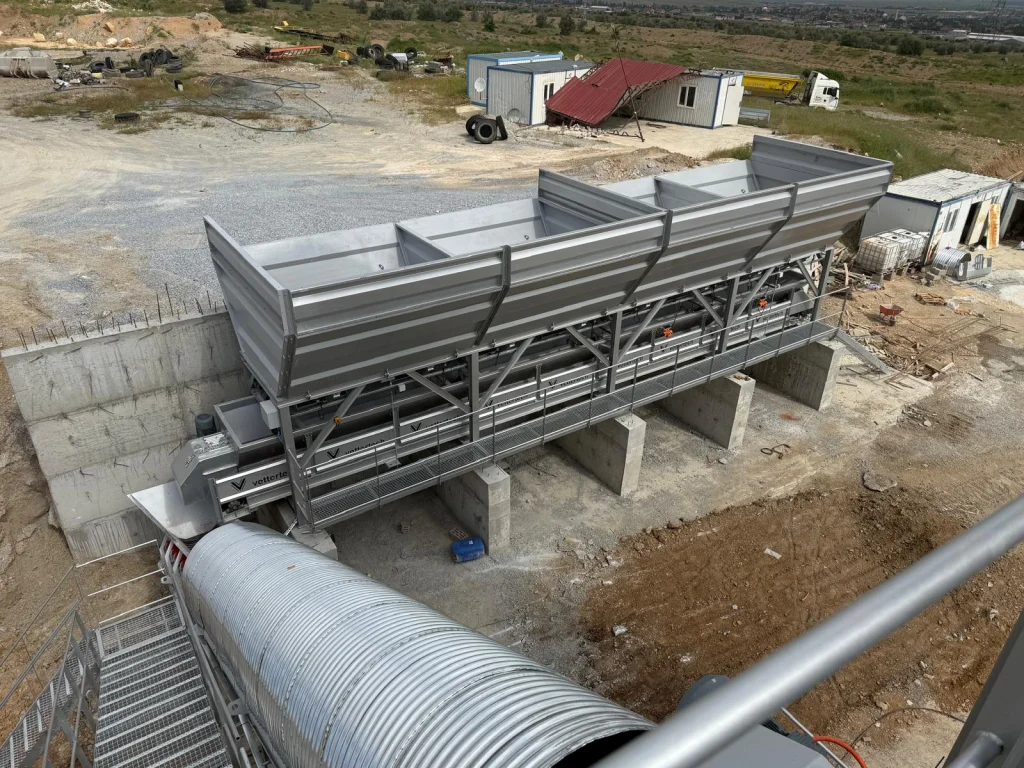
Typical capacity ranges by application
| Application | Typical plant type | Capacity range |
|---|---|---|
| On-site production, precast workshop | Compact or mobile | 30–60 m³/h |
| Medium-sized ready-mix | Mobile or stationary | 60–120 m³/h |
| Large ready-mix, infrastructure projects | Stationary | 120–200 m³/h and above |
For the differences between plant types, read our mobile vs stationary guide and browse our stationary, mobile and compact concrete batching plants. Send us your daily demand and site details and we will calculate the capacity with you.
Let's choose the right plant for your project
Get a free quote for a concrete batching or crushing plant that fits your capacity, site and budget.