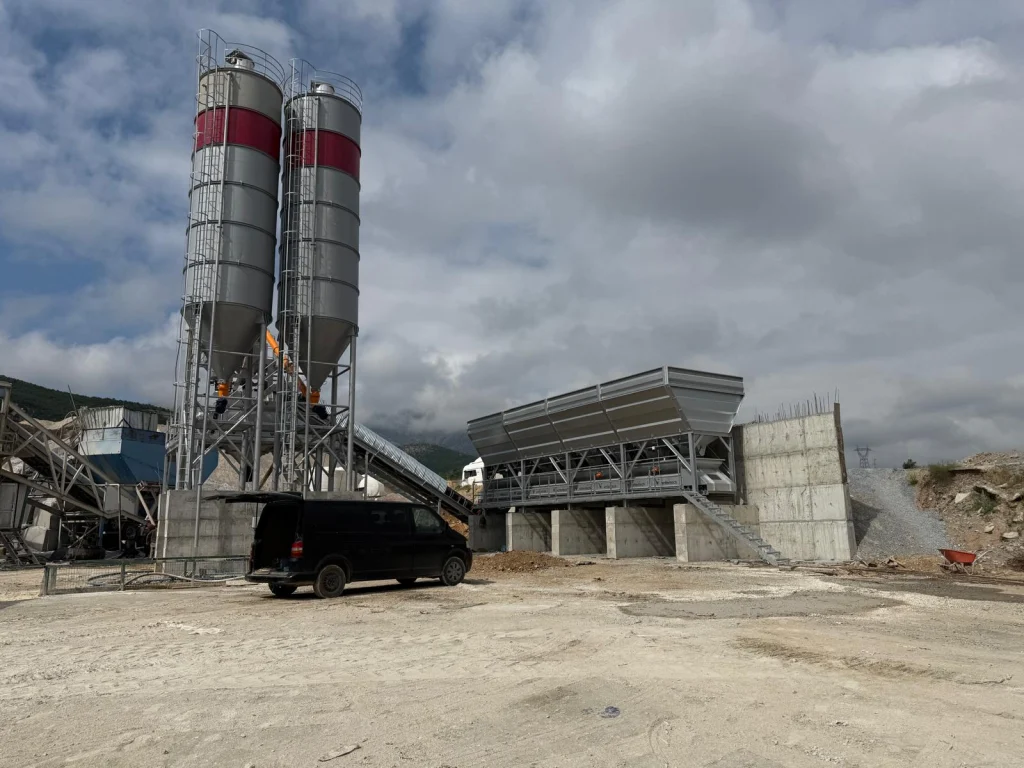
A cement silo is a vertical tank that stores cement, fly ash and similar powders, protects them from moisture and feeds them by screw conveyor to the plant’s weighing system. Choosing the right size and equipment is as important as choosing the mixer if production is to run without interruption.
Types of silo
- Welded (one-piece) silo: built in one piece in the factory. Quick to erect on site, but large diameters can exceed transport limits.
- Bolted silo: shipped as panels and bolted together on site. Easy to ship in containers to distant countries and preferred for large capacities.
- Horizontal (mobile) silo: comes on a chassis and needs no foundation. Used with frequently relocated mobile plants and short jobs.
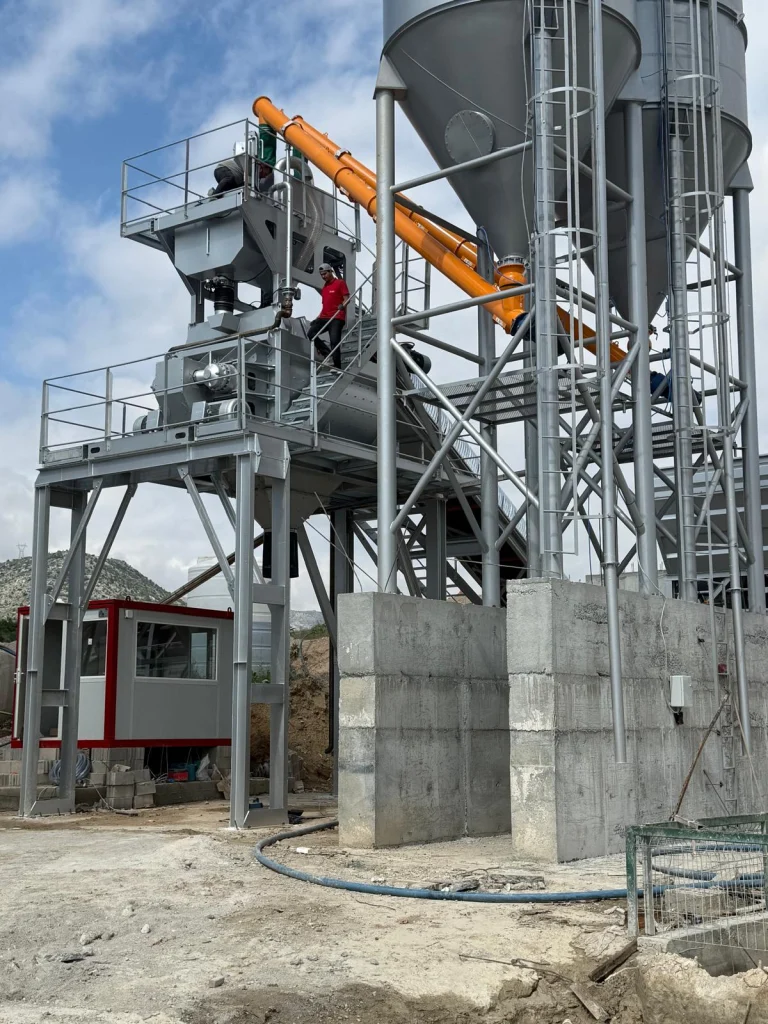
Silo equipment
- Silo-top dust filter: cleans the air released during pneumatic filling from a tanker. Jet-pulse filters clean themselves with compressed air.
- Safety (pressure relief) valve: protects the silo if overpressure builds up during filling.
- Level sensors: signal minimum and maximum levels, preventing overfilling and running empty. Continuous level measurement or load-cell weighing are also options.
- Aeration system: stops cement from bridging and compacting in the cone.
- Butterfly valve and screw conveyor: open and close the silo outlet and carry cement to the cement scale.
- Filling pipe, ladder and handrails: provide safe filling and maintenance access.
How to size silo capacity
Start from daily cement consumption and the number of days of stock you want. Example: a plant producing 100 m³/h for 8 hours a day with an average of 350 kg of cement per m³ uses about 100 × 8 × 0.35 = 280 t of cement a day. If you want at least one day of stock against supply delays, total silo capacity must exceed that.
- Different cement types and fly ash need separate silos.
- The empty part of the silo should hold at least one full tanker load so that deliveries can be planned.
- Size the silos together with the plant. See our capacity calculation guide for details.
Maintenance and safety
- Regularly check filter cleaning and drain water from the compressed-air line.
- Test periodically that the safety valve moves freely.
- Make sure the level sensors work correctly; a faulty sensor is an overfilling risk.
- Inspect the shell, legs and bolted joints for corrosion and loosening every year.
- Entering a silo is confined-space work and must never be done without a permit, gas testing and supervision.
See our cement silos page or contact us to choose the right number and size of silos for your plant.
Let's choose the right plant for your project
Get a free quote for a concrete batching or crushing plant that fits your capacity, site and budget.