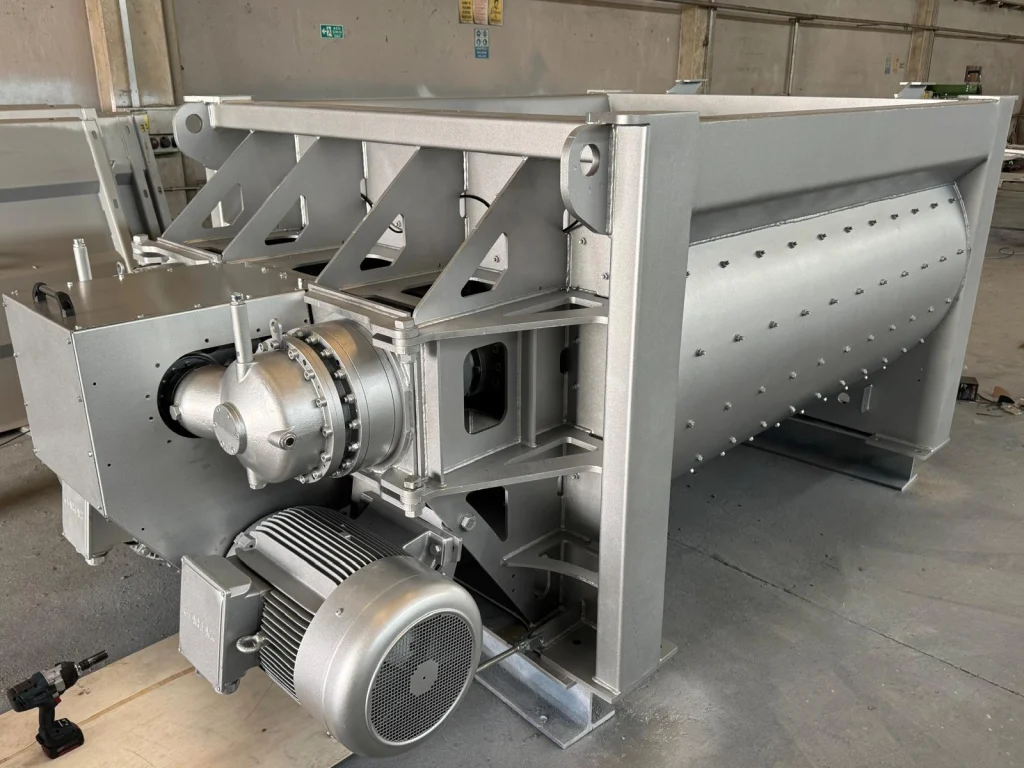
The twin-shaft mixer is the most widely used mixer in ready-mix concrete batching plants. Two parallel horizontal shafts turn in opposite directions inside the mixing trough, and the arms and paddles on them move the concrete both along and across the trough. This intense movement produces a homogeneous mix in a short time.
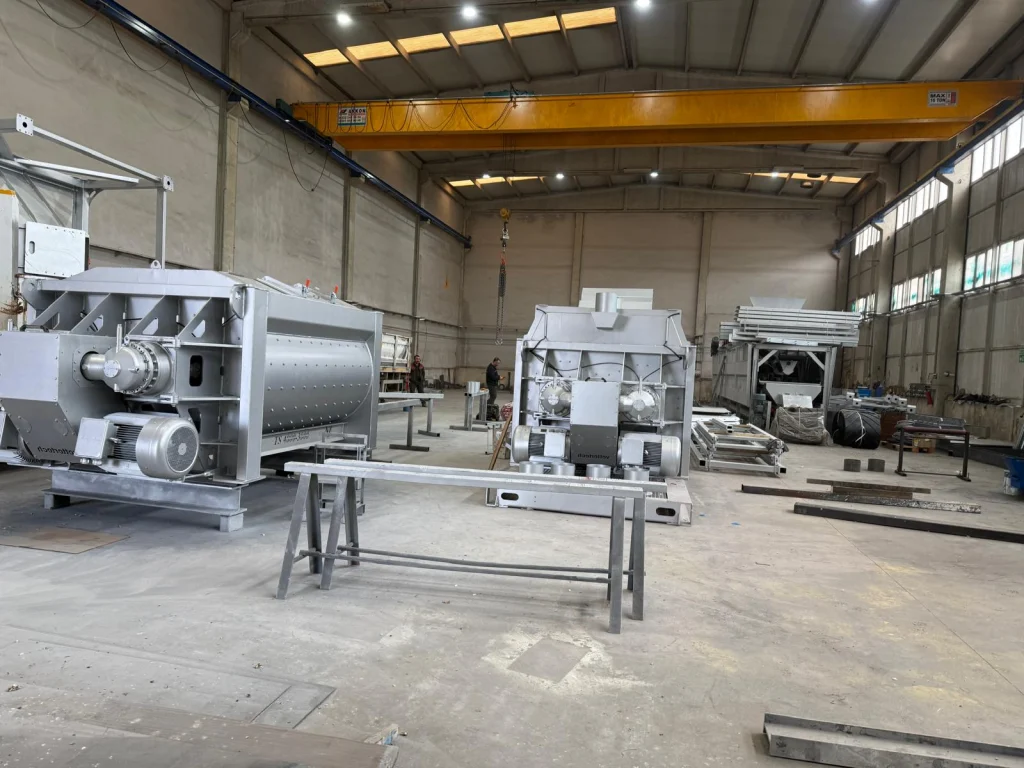
How does a twin-shaft mixer work?
Weighed aggregates, cement, water and admixtures are discharged into the mixer in a set sequence. The paddles are arranged in a helix, so the material is pushed from one end of the trough to the other and the two flows meet in the middle. When the mixing time is over, the discharge gate under the mixer opens and the concrete goes into a truck mixer or a pump.
- Trough and liners: the inside of the trough is protected by replaceable wear-resistant liner plates.
- Shafts, arms and paddles: they do the mixing; paddles are adjusted or replaced as they wear.
- Drive unit: electric motors and gearboxes turn both shafts in sync.
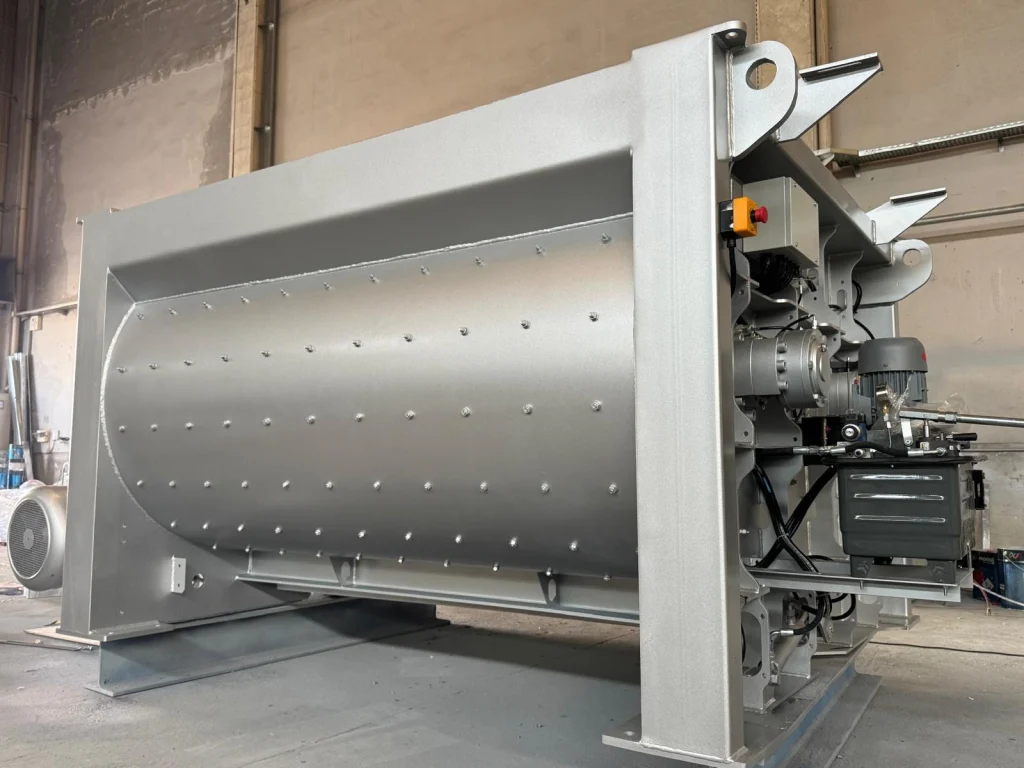
- Discharge gate and hydraulic unit: the gate is usually opened hydraulically. A hand pump that opens it during a power cut keeps concrete from setting inside the mixer.
- Shaft seals and lubrication: an automatic lubrication unit pushes grease into the shaft-end seals so that cement paste cannot reach the bearings.
How is capacity stated?
Mixer capacity is given in two ways: dry filling volume (loose material entering the mixer) and compacted fresh concrete output per batch. A “2 m³ mixer” usually means 2 m³ of compacted concrete per batch; the dry filling volume is about 1.5 times that. Always check which value a quotation refers to.
The hourly output of the plant is the batch volume multiplied by the number of batches per hour. See our guide to calculating batching plant capacity for the details.
Twin-shaft or planetary mixer?
| Feature | Twin-shaft mixer | Planetary mixer |
|---|---|---|
| Mixing action | Two horizontal shafts, counter-rotating | Stirrers rotating on vertical axes |
| Typical use | Ready-mix, infrastructure, high output | Precast, coloured and special concrete |
| Batch size | Medium to large | Small to medium |
| Mixing time | Short; high hourly output | Slightly longer; very precise homogeneity |
| Aggregate size | Handles coarse aggregate well | Most efficient with fine and medium aggregate |
In short, the twin-shaft mixer suits high-volume production, while a planetary mixer is better for precast work where mix precision matters most. See all options on our concrete mixers page.
Maintenance for a long service life
- Wash the mixer at the end of every shift; never let concrete build up on paddles or the trough.
- Check the gap between paddles and liners regularly; a growing gap lowers mix quality and lets a concrete layer form on the liners.
- Check the grease level of the lubrication unit and make sure grease reaches the shaft seals.
- Periodically test the hydraulic oil level, the gate seal and the emergency hand pump.
- Change gearbox oil at the intervals recommended by the manufacturer.
- Before entering the mixer, always isolate, lock and tag the power supply.
Contact us to choose the right mixer size for your plant.
Let's choose the right plant for your project
Get a free quote for a concrete batching or crushing plant that fits your capacity, site and budget.