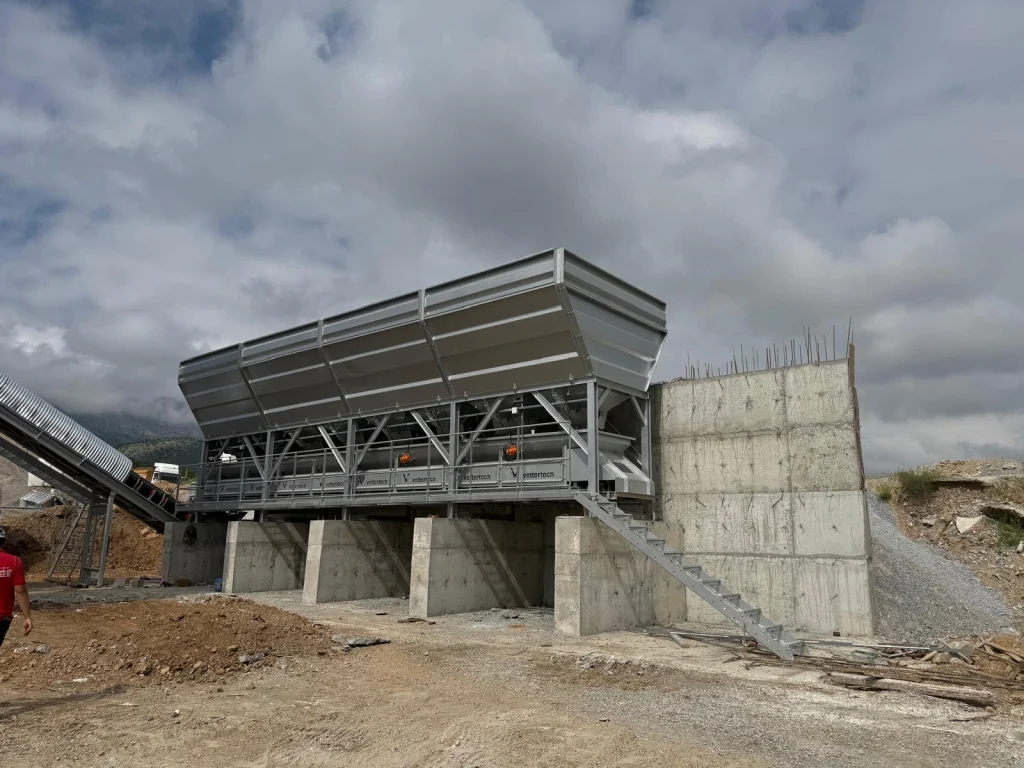
A concrete batching plant only runs efficiently and safely if it is installed correctly from day one. A badly placed aggregate bin, an undersized foundation or missing power infrastructure can slow production for years. Below are the steps from site preparation to the first pour, in order.
1. Site layout
Before installation, plan how the plant will sit on the site: aggregate stockpiles and loader movement, truck mixer entry, exit and queuing lanes, bulk cement tanker filling points, the washout and concrete recycling area, and the laboratory and office. One-way truck traffic without waiting has a direct effect on hourly output.
2. Ground survey and foundation design
Silos, the mixer tower and aggregate bins carry large vertical loads as well as wind and seismic loads. A ground survey is carried out and the foundations are built to a structural design. Anchor bolt positions must match the equipment drawings precisely. Heavy erection starts only after the foundation concrete reaches the strength specified in the structural design.
3. Power, water and compressed air
- A transformer or grid connection sized for the plant’s total installed power, plus cable trays
- A water supply with enough flow for production, and a water tank
- A compressor and air lines for pneumatic gates and silo filters
- If you will produce in winter, preparation for water and aggregate heating
4. Transport and mechanical erection
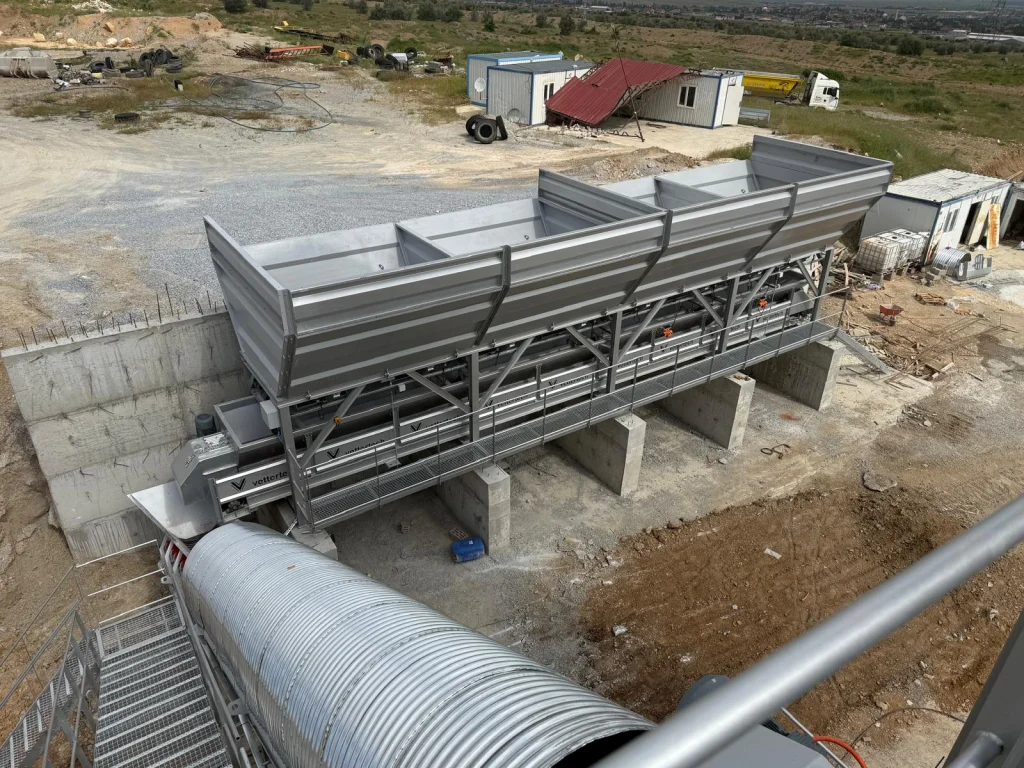
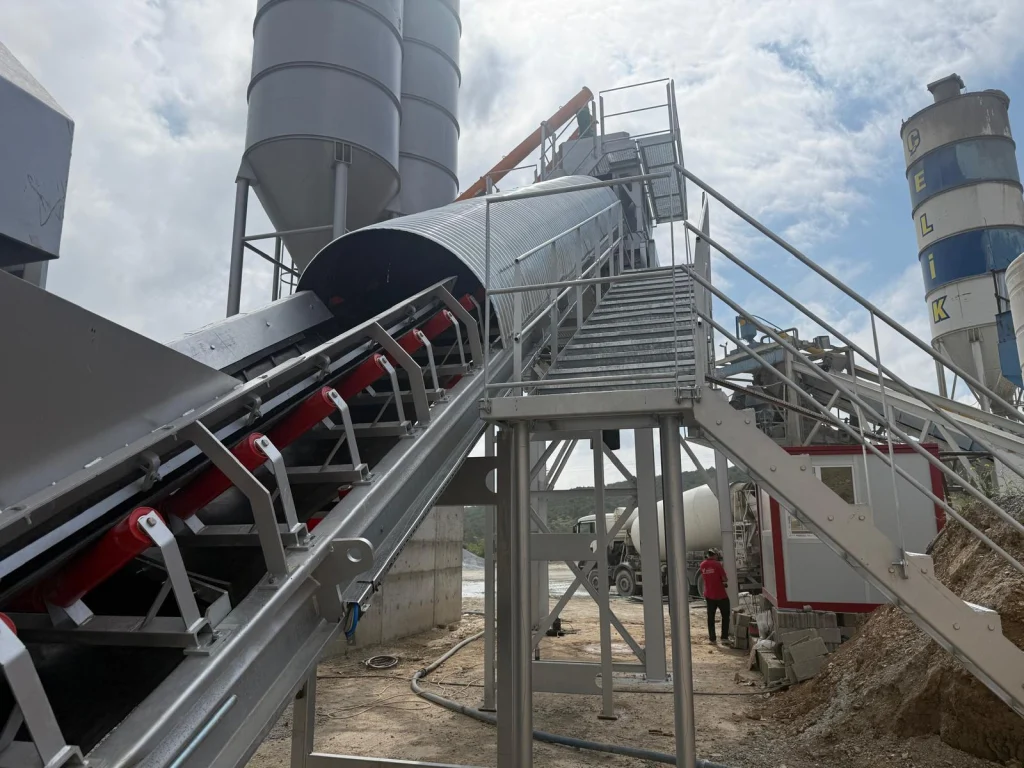
Equipment usually arrives in modules and is lifted into place by crane. A typical sequence is: aggregate bins, the weigh conveyor and inclined belt conveyor (or skip), the mixer and mixer platform, cement silos and screw conveyors, then platforms, stairs and handrails. Mobile and compact plants are largely pre-assembled in the factory, so this stage is shorter; stationary plants need more site work.
5. Electrical and automation connections
Motors, gates, load cells, level sensors and emergency stop buttons are wired to the control panel. Every input and output is tested one by one, and motor directions and emergency stop circuits are checked.
6. Scale calibration
The aggregate, cement, water and admixture scales are calibrated with certified test weights. Concrete quality depends directly on weighing accuracy, so this step must not be skipped and should be repeated at regular intervals.
7. Commissioning and first production
- Equipment is run empty; belts, screw conveyors and the mixer are checked without load.
- Trial batches are produced; mixing time and discharge sequence are tuned.
- Fresh concrete tests are carried out and samples are taken.
- Operators are trained on recipe entry, production, daily cleaning and safety rules.
Vettertech installs and commissions plants in Türkiye and abroad, including the UK, Saudi Arabia, the UAE and Algeria; see our projects. Contact us to plan your installation.
Let's choose the right plant for your project
Get a free quote for a concrete batching or crushing plant that fits your capacity, site and budget.